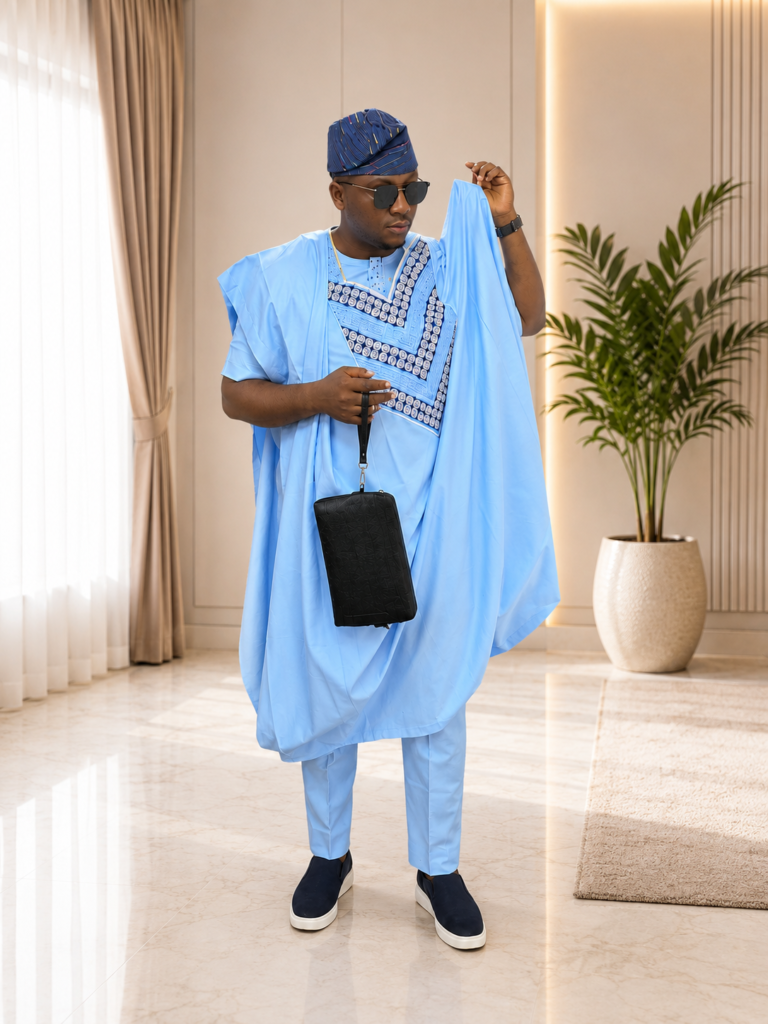
There is a conversation that happens in offices across Nigeria every week. Someone walks in wearing an Ankara blazer, a well-pressed Agbada, a Yoruba print dress, or a beautifully tied gele, and someone else — almost always with the best intentions — says something like: “You look lovely, but is it not a bit too traditional for a work setting?”
This article is the answer to that question.
The answer is no. It is not too traditional. It is not unprofessional. It is not out of place. It is, in fact, exactly what should be happening in offices across Nigeria, across Africa, and across the diaspora — and it should be happening far more than it currently does.
Here is why.
The Workplace Is Not a Neutral Space
Let us start with something that is rarely said plainly enough: the idea that a suit and tie represents “professional” and African attire represents “casual” or “traditional” is not a universal truth. It is a cultural preference that has been elevated to a standard — primarily through colonialism and its long aftermath — and then presented as if it were objective.
The Western suit originated in seventeenth-century European courts. It has no inherent connection to competence, intelligence, work ethic, or professionalism. It became the global standard of office wear because European economic and political dominance over the past three centuries made European cultural norms the default in business contexts worldwide.
Understanding this does not require anger. It simply requires clarity. The suit is not neutral. It is cultural. And once that is understood, the question changes from “is African attire appropriate for work?” to “whose cultural standard are we applying, and why?”
Wearing African Attire to Work is a Professional Statement
Some of the most powerful and respected professionals on the African continent wear traditional attire to work as a matter of deliberate choice — not despite their authority, but as an expression of it.
Traditional rulers, senior government officials, leading lawyers, prominent academics, celebrated architects and engineers — across Nigeria and across Africa, men and women in positions of genuine authority choose African dress in professional settings every day. They are not dressing down. They are dressing with full awareness of what their clothes communicate: cultural pride, rootedness, and the confidence that comes from knowing exactly who you are and where you come from.
An Agbada in a boardroom does not say “I am not serious.” It says “I am serious enough about my identity to wear it in the most formal settings available to me.” That is not a weak statement. That is one of the strongest statements a person can make.
The Benefits of Wearing African Attire to Work
It preserves culture in the spaces that matter most.
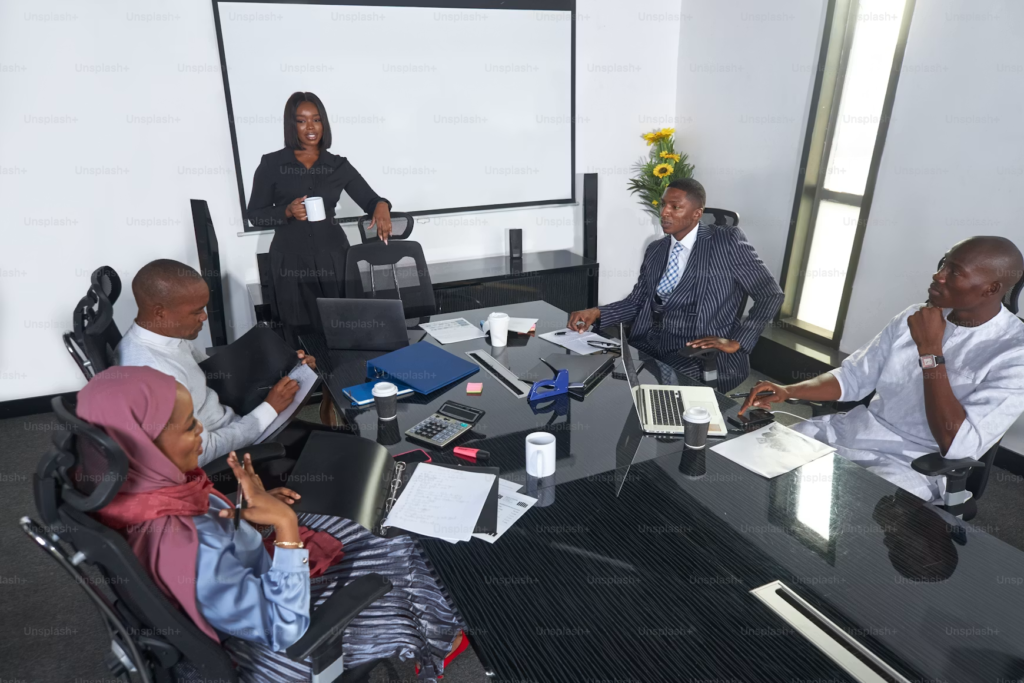
Culture does not only live in ceremonies, festivals, and celebrations. It lives — or dies — in the everyday choices that people make about how to present themselves to the world. The office is where most working Nigerians spend most of their waking hours. If African attire disappears from that space, it loses significant ground. If it is present there — visible, confident, and normalised — it gains ground.
Every Nigerian who wears Ankara to a Monday morning meeting, every professional who sits in a client presentation in a well-tailored traditional dress, every teacher who stands at the front of a classroom in Adire — they are all doing something that matters far beyond the personal. They are making traditional dress visible and normal in the contexts where visibility matters.
It supports Nigerian businesses and artisans.
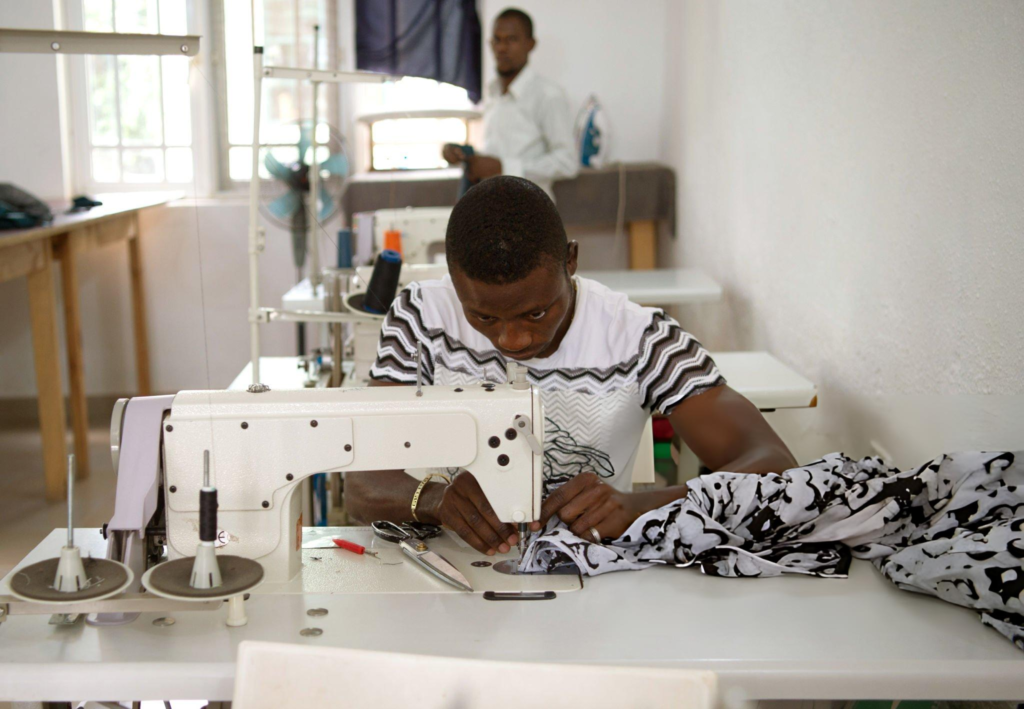
Wearing African attire to work means buying African attire. Buying African attire means commissioning from Nigerian tailors, purchasing from Nigerian fabric markets, supporting Nigerian designers. Every Ankara dress bought for the office is money that flows to Balogun Market, to a Yoruba tailor in Ilorin, to an Igbo fabric trader in Aba, to a Hausa embroidery artisan in Kano.
The Nigerian fashion industry is one of the continent’s most vibrant creative economies. It employs millions directly and indirectly. When Nigerian professionals choose to wear their cultural dress to work, they are not just making a fashion choice — they are making an economic choice that directly supports the livelihoods of other Nigerians.
It challenges outdated colonial thinking.
There is a version of professional aspiration in Nigeria that is still, quietly, built on the assumption that to be taken seriously one must dress like a Western professional. This assumption is not spoken aloud very often. But it operates in the background of many hiring decisions, many client meetings, many salary negotiations.
Wearing African attire to work is one of the most direct and peaceful ways to challenge that assumption. Not through argument, not through protest, but through presence. Walking into a room in a beautifully made Ankara suit and doing excellent work in it rewrites the story more effectively than any speech.
It is good for your mental health and confidence.
This is not a small point. Research consistently shows that what we wear affects how we feel and how we perform. When people wear clothes that reflect their identity authentically — clothes that carry personal and cultural meaning — they report higher confidence, greater comfort, and stronger sense of self.
For a Nigerian professional, wearing traditional attire is not a departure from identity — it is an expression of it. The comfort that comes from wearing something that is genuinely yours, that carries your culture and your history, is different from the comfort of wearing a borrowed aesthetic. It is deeper. It is quieter. And it shows.
It creates community and recognition.
When you walk into a room in Ankara and another Nigerian is already there, something happens. A recognition. A small, wordless acknowledgement of shared identity. In a diaspora context — working in London, New York, Toronto, or Dubai — this matters enormously. African attire in a professional setting signals to other Africans that they are not alone, that their culture is present and valued, that they do not have to set aside who they are to belong here.
That sense of community and recognition is not trivial. For many Africans working far from home, it is genuinely sustaining.
Why Our Children Must Never Forget
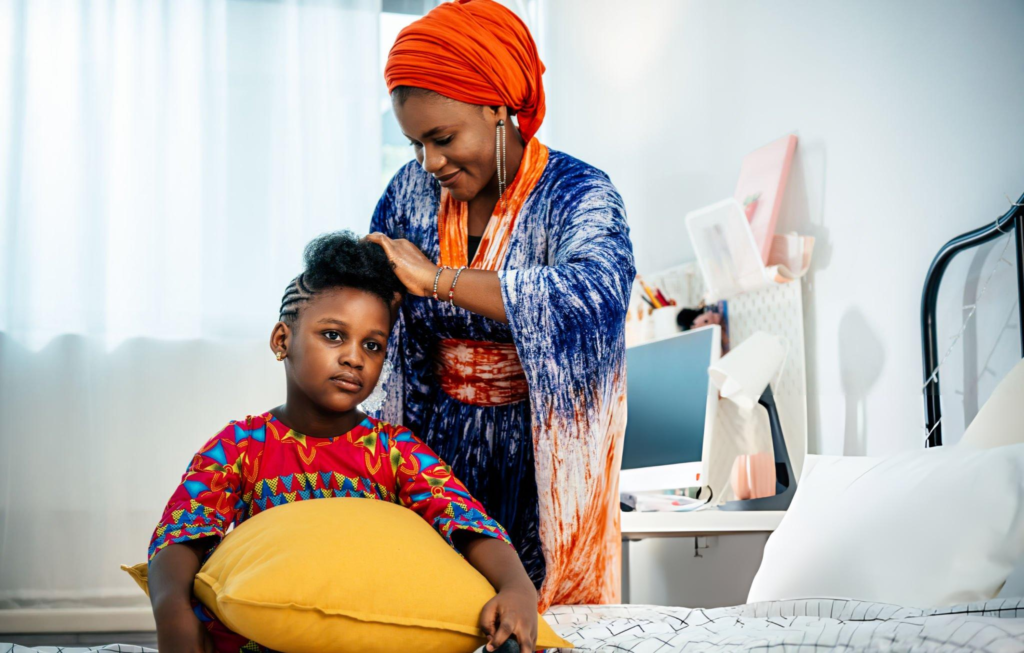
This is where the conversation becomes urgent.
There is a pattern that repeats itself in many upwardly mobile Nigerian households. The parents work hard, build success, move to better neighbourhoods, send children to better schools — and somewhere in that process, the children begin to drift from their cultural roots. The Yoruba language gets spoken less at home. The traditional dress comes out only for ceremonies. The family’s food, music, and customs become occasional rather than everyday. By the third generation, in some diaspora families, the connection to African heritage has become almost entirely ceremonial — a performance at cultural events rather than a living part of daily identity.
This is not a moral failure. It is a structural pressure. Schools, media, peer groups, professional environments — all of these exert constant pressure toward cultural assimilation. Without deliberate resistance, assimilation is what happens.
The resistance starts at home. And it starts with something as simple as what your children see you wearing.
Children learn identity by observation, not instruction.
You cannot tell a child to be proud of their culture while never visibly expressing that pride yourself. Children watch what adults do, not what adults say. When a child grows up seeing their parents wear traditional dress — not just to church on Sunday or to a naming ceremony, but on a regular Tuesday, to a parent-teacher meeting, to the market, to work — they receive a message that goes much deeper than anything that can be spoken: this is normal, this is ours, this is something to be worn with ease and pride.
When traditional dress appears only at ceremonies, the child’s subconscious categorises it accordingly — as ceremonial, as special-occasion, as separate from everyday life. When it appears in everyday life, the child integrates it into their understanding of what normal looks like.
Language and dress are the first things that go. They must be the last.
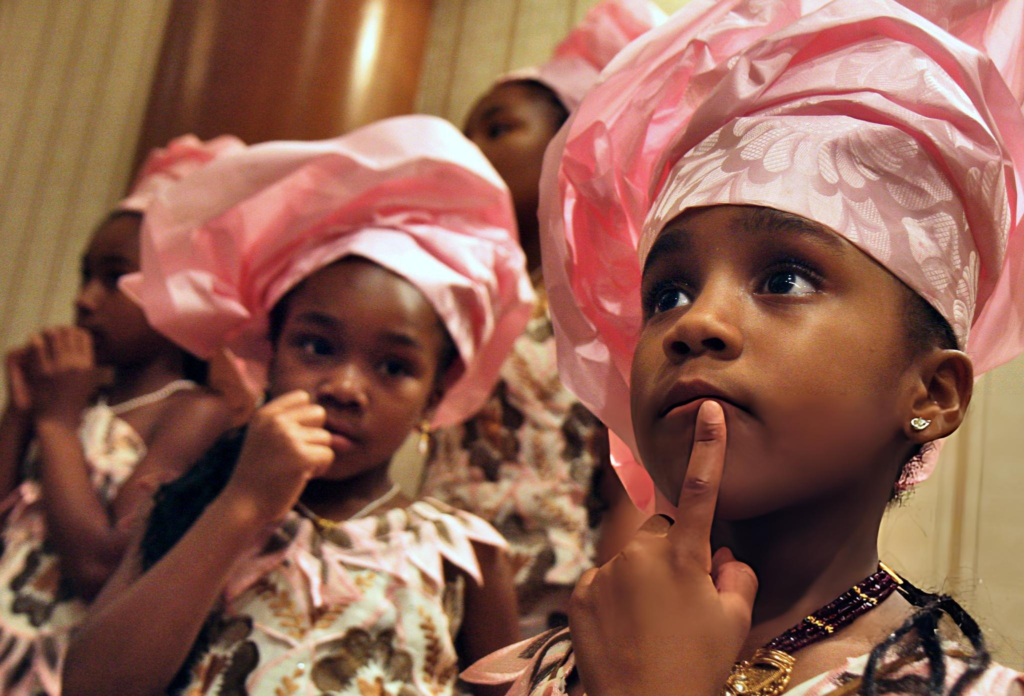
Of all the dimensions of cultural heritage — food, music, religion, values, language, dress — language and dress are the most visible and the most vulnerable. They are the things that most directly identify a person as part of a cultural community to the outside world, and they are therefore the things that face the most social pressure in assimilationist environments.
They are also, for that very reason, the things that must be most deliberately protected.
Teaching a child to wear traditional dress — not as a costume, not as a performance, but as a natural part of how they present themselves to the world — is one of the most protective things a parent can do for that child’s cultural identity. It gives them an anchor. Something they carry in their body, not just in their memory.
The world is not asking us to forget. We are choosing to.
It is important to be honest about this. No one is forcing Nigerian children in diaspora communities to abandon their culture. No law prohibits traditional dress. No school in London or Lagos bans Ankara. The drift happens because of choices — small, incremental, individually understandable choices — made over time in response to social pressure.
But choices can be made differently. The pressure is real. The drift is understandable. And the reversal is possible, and it starts with something as immediate and tangible as what we wear.
Practical: How to Wear African Attire to Work
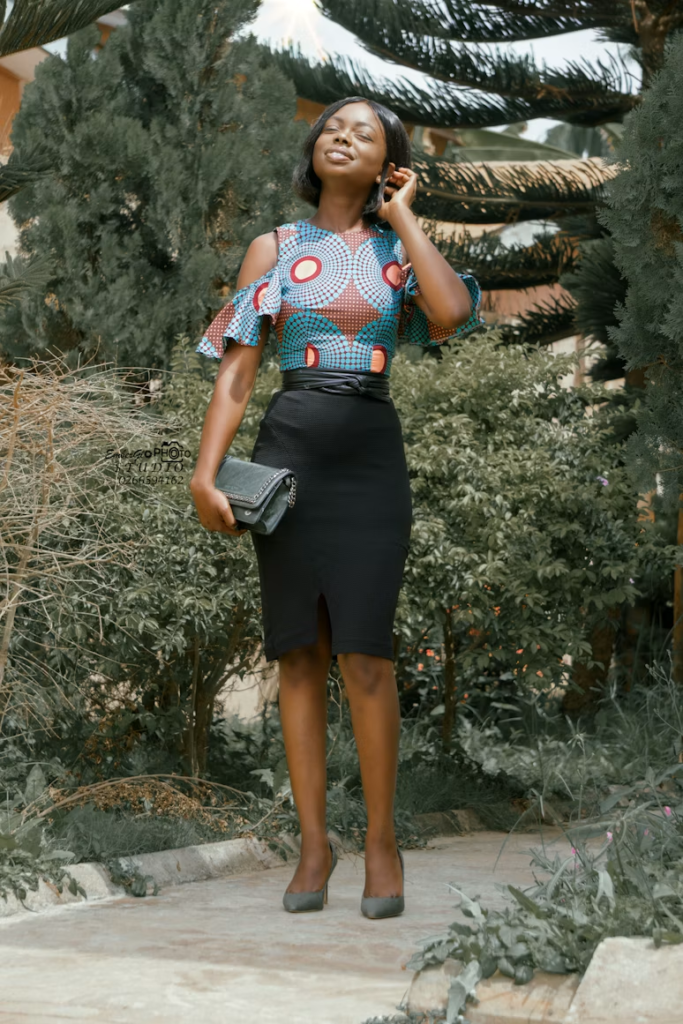
The worry about wearing traditional dress to work is often practical rather than ideological — how do I do this without looking out of place? These are the principles that make it work.
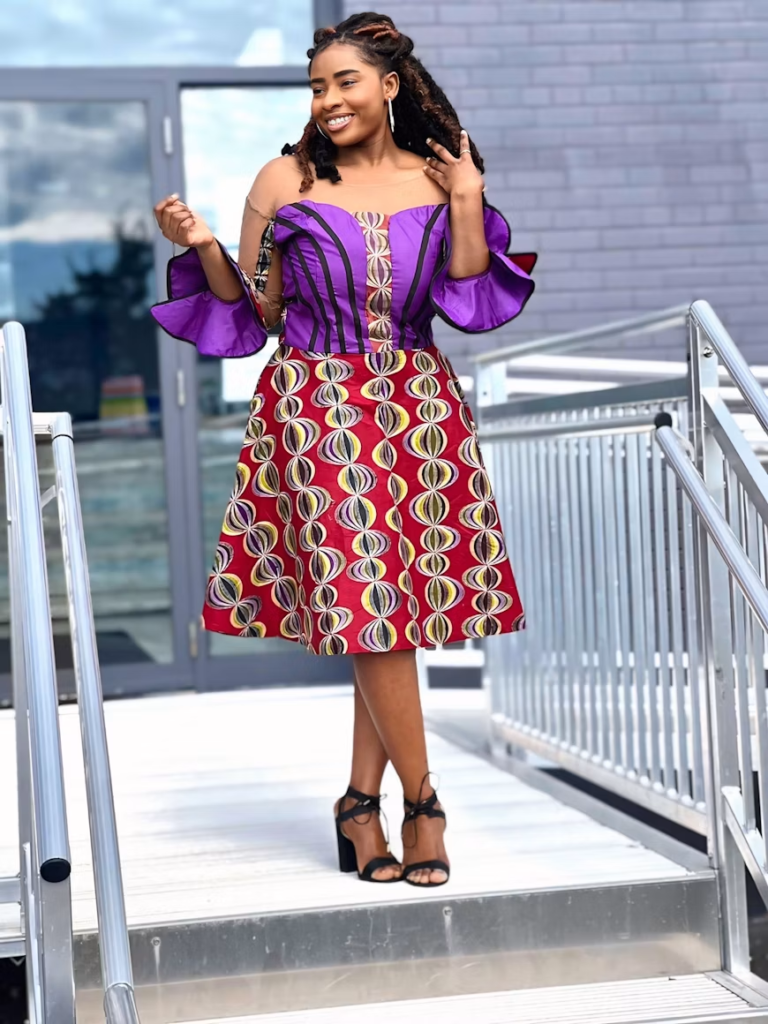
Start with one strong piece. You do not need to wear a complete three-piece traditional outfit to make the statement. An Ankara blazer over plain trousers. An Ankara skirt with a plain white blouse. A traditional cap with a well-cut plain suit. One strong cultural piece, worn with confidence, is enough to begin.
Let the tailoring be excellent. A badly fitted Ankara dress does not make a case for African attire at work. A perfectly fitted one makes it irresistible. The argument for traditional professional dress depends heavily on the quality of execution. Find a good tailor. Invest in the fit.
Choose prints that read well in professional settings. Not every Ankara print translates equally to office contexts. Geometric prints and smaller-scale patterns tend to read as more formal. Bold, large-scale florals can work but require more confidence in the overall styling. Deep jewel tones — burgundy, navy, forest green, emerald, black — carry more professional authority than very bright or pastel prints.
Wear it consistently, not occasionally. The awkwardness of wearing traditional attire to work diminishes quickly once it becomes a regular pattern. The first time you walk into a meeting in Ankara, people notice. By the fifth time, it is simply how you dress. Consistency normalises it — for your colleagues and for yourself.
Bring your children into the habit. Let them see you dress for work in traditional attire. Let them understand that their cultural dress is appropriate everywhere their parents go. Let them wear it themselves — to school on cultural dress days, to family events, to occasions where a suit is not required. Make it normal before they are old enough to feel the pressure to make it exceptional.
A Final Word
African attire does not belong only at weddings, naming ceremonies, and cultural festivals. It belongs in boardrooms, classrooms, courtrooms, hospitals, and offices. It belongs in Lagos and in London. It belongs in the everyday, not just the ceremonial.
Our culture did not survive centuries of colonial pressure by being kept behind glass for special occasions. It survived because people carried it in their bodies — in their dress, their language, their food, their ways of being with each other — through every ordinary day.
Our children are watching. They are learning what our culture is worth from what we do with it on an ordinary Tuesday.
Show them it is worth wearing. Every day.
Looking for a bespoke traditional outfit for yourself, your family, or your children — something made to fit, made to last, and made to be worn proudly? Contact Ola & Vick on +234 81 0712 7312 — call or WhatsApp and we will take care of everything.
Also read: Why Ankara is the Best Fabric for African Fashion · Ankara Skirt and Blouse: New Designs for 2026 · Kids & Culture